
E-commerce PPC, why Google and social ads need to work together
Most conversations about e-commerce PPC start and end with Google, Search, Shopping, or increasingly, Performance Max. That's a reasonable starting point, but it misses something the current data makes hard to ignore, social advertising isn't a separate channel competing for the same budget, it's actively making Google Ads cheaper and more effective when the two run together.
Google still does the heavy lifting, but not evenly
Not all Google campaign types perform the same for e-commerce, and the gap is bigger than most stores realise.
| Campaign Type | Average CPC | Average ROAS |
|---|---|---|
| Search | $1.42 | $5.1x |
| Shopping | $0.68 | 5.1x |
| Performance Max | $0.82 | 4.8x |
Shopping campaigns run at roughly half the cost per click of standard Search, largely because shoppers arrive already self-qualified; they've seen the product image and price before clicking, so the traffic is simply closer to a purchase decision. Performance Max sits between the two, a slightly higher CPC than Shopping but reaching across Search, Shopping, Display, YouTube, Gmail and Maps from one automated campaign. It's become the default for a reason, 72% of e-commerce brands now run Performance Max as their primary Google campaign type, trading some manual control for broader reach and less day-to-day management.
Worth knowing before committing entirely to automation though, standard Shopping campaigns still edge out Performance Max on ROAS for stores with the management time to run them properly. The real choice isn't Shopping versus Performance Max, it's how much hands-on control your team actually has time for.
Where social fits, and why it isn't optional anymore
Meta alone captures 25-30% of e-commerce ad budgets, second only to Google's 40-45% share, and TikTok's ad revenue grew 64% year on year, the fastest of any major platform. That's a lot of budget, but the more interesting shift is how people convert once they're there.
Shoppable social ads, formats letting someone complete a purchase without leaving the app, now drive 34.7% of all social PPC conversions, up from 18.3% just two years earlier. That's not a marginal trend; it's a genuine shift in where the actual purchase decision happens, and a store running social purely for awareness while treating Google as the only conversion channel is increasingly working against the data.
The part most e-commerce PPC advice misses
Here's the genuinely underused insight: running social advertising alongside Google Ads doesn't just add a second channel; it measurably improves the first one.
Brands with active social advertising generate more branded search queries meaningfully, and that branded search lift improves Google Ads quality scores and expected click-through rates enough to reduce Google Ads CPC by an estimated 12-18%.
In practice, that means a store treating Google and social as competing budgets is leaving real efficiency on the table. Someone who sees your brand on Instagram and later searches for it directly is a warmer, cheaper click than someone Google is trying to win cold, and that's exactly the kind of compounding effect a genuinely joined-up strategy is built to capture.
B2C and B2B e-commerce PPC aren't the same game
Most e-commerce PPC advice defaults to B2C assumptions, but B2B e-commerce, wholesale platforms, business supply stores, B2B SaaS with a self-serve storefront, runs on a different channel mix entirely. LinkedIn delivers the highest ROAS of any platform for B2B campaigns specifically, reflecting the value of reaching a buyer by role, seniority and company rather than broad demographic targeting. A B2B e-commerce store pouring budget into TikTok because it's the fastest-growing platform overall is optimising for the wrong audience.
Picture two stores running the exact same total ad budget.
A beauty brand selling direct to consumers gets the most out of that budget spread across Instagram, TikTok and Google Shopping, visual, fast-moving platforms that match how people actually browse and buy beauty products on impulse.
A business supplying packaging materials to other companies gets almost nothing from TikTok reach; its buyers aren't scrolling for inspiration, they're comparing suppliers by role and company size, which is exactly what LinkedIn's targeting is built for. Running the beauty brand's channel mix on the packaging supplier's budget wouldn't just underperform; it would actively waste the spend on an audience that was never going to convert.
The practical takeaway is the same either way: the right channel mix depends entirely on who's actually buying, not which platform is growing fastest in aggregate.
Retargeting, the quiet workhorse of e-commerce PPC
Most e-commerce PPC conversation focuses on winning new traffic, but retargeting, showing ads specifically to people who've already visited without buying, is often the most cost-efficient part of the whole strategy. Retargeting display ads deliver roughly three times the cost per acquisition of cold campaigns targeting new audiences, since the audience has already shown real interest rather than needing to be convinced from scratch.
Dynamic remarketing, showing someone an ad for the exact product they viewed rather than a generic brand message, performs even better, meaningfully boosting conversions over static retargeting creative. For an e-commerce store with any meaningful traffic volume, a dedicated remarketing strategy running alongside new-customer acquisition campaigns is usually one of the highest-return pieces of the whole PPC budget, not an afterthought bolted on at the end.
Creative and landing page details that move the needle
Channel strategy only gets a campaign so far, what the ad and landing page actually look like matters just as much, and a few consistent patterns are worth building into any e-commerce PPC campaign from the start.
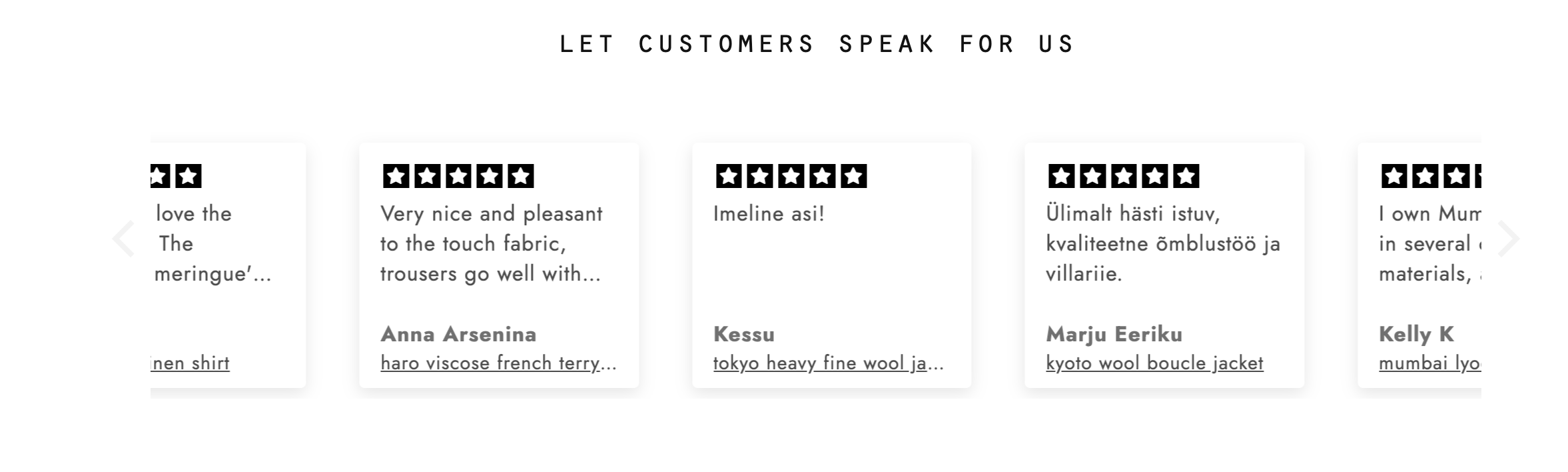
One of our clients customer reviews!
Ads featuring customer reviews convert meaningfully higher than those without, genuine social proof still outperforms polished brand messaging alone
Mobile-optimised ads and landing pages convert significantly better, unsurprising given how much e-commerce browsing now happens on a phone, but still a common gap between what performs and what stores actually ship
Landing pages including video convert noticeably higher than static pages alone
A clear, unambiguous call to action measurably improves click-through rate over vaguer alternatives
None of these are complicated fixes, but together they compound in the same way channel strategy does, small, consistent improvements across creative, landing page and targeting add up to a meaningfully more efficient campaign than any single change on its own.
Building an e-commerce PPC strategy that actually reflects this
A few principles worth taking from the data above, regardless of whether you're B2C or B2B.
Lead with Shopping or Performance Max on Google, not Search alone, given the meaningful gap in cost efficiency
Treat social advertising as a genuine contributor to Google Ads performance, not a separate line item competing for the same fixed budget
Match platform mix to actual buyer type, LinkedIn for B2B, broader social reach for B2C, rather than defaulting to whatever's trending
Run dedicated retargeting alongside new-customer campaigns; it's consistently one of the cheapest, highest-return parts of the budget
Get the basics of creative and landing page right- reviews, mobile optimisation, video, a clear call to action, before assuming a channel or campaign type is the problem
Reassess the Shopping versus Performance Max balance based on how much hands-on management time you actually have, not just which one benchmarks better on paper
This is the same thinking behind our e-commerce SEO work; channels compound when they're built to work together rather than run in isolation. On the PPC side, our Google Ads and paid social advertising services are built around this kind of joined-up strategy, not two separate campaigns that happen to share a client.
Where Blu Mint fits

Our client Gwubi
Kairi, our web design lead, designed and built Gwubi, a slow fashion label for women, on Shopify, giving a real example of what a considered, genuinely on-brand B2C storefront looks like once it's live. It's the same platform, and the same conversion-focused thinking, behind the Shopify e-commerce development work we do for clients more broadly.
-
It depends on management capacity. Performance Max reaches more placements with less day-to-day involvement, and 72% of e-commerce brands now run it as their primary campaign type. Standard Shopping campaigns can outperform it on ROAS for stores with the time to manage them closely.
-
Yes, measurably. Active social advertising drives more branded search volume, which improves Google Ads quality scores and can reduce cost per click by an estimated 12-18%. The two channels aren't competing for budget, they're reinforcing each other.
-
Significantly. LinkedIn delivers the strongest ROAS for B2B specifically, reflecting the value of targeting by role and company rather than broad demographics. A B2B e-commerce store should build its channel mix around where its actual buyers are, not which platform has the most overall growth.
-
Almost always, yes. Retargeting display ads typically deliver around three times cheaper cost per acquisition than cold campaigns, since the audience has already shown genuine interest. Dynamic remarketing, showing someone the exact product they viewed, tends to perform even better than generic retargeting creative.
If you're running e-commerce PPC as separate Google and social campaigns rather than one joined-up strategy, get in touch to speak with Lele, our PPC lead.