AI citation tracking, why visibility and traffic aren't the same metric anymore
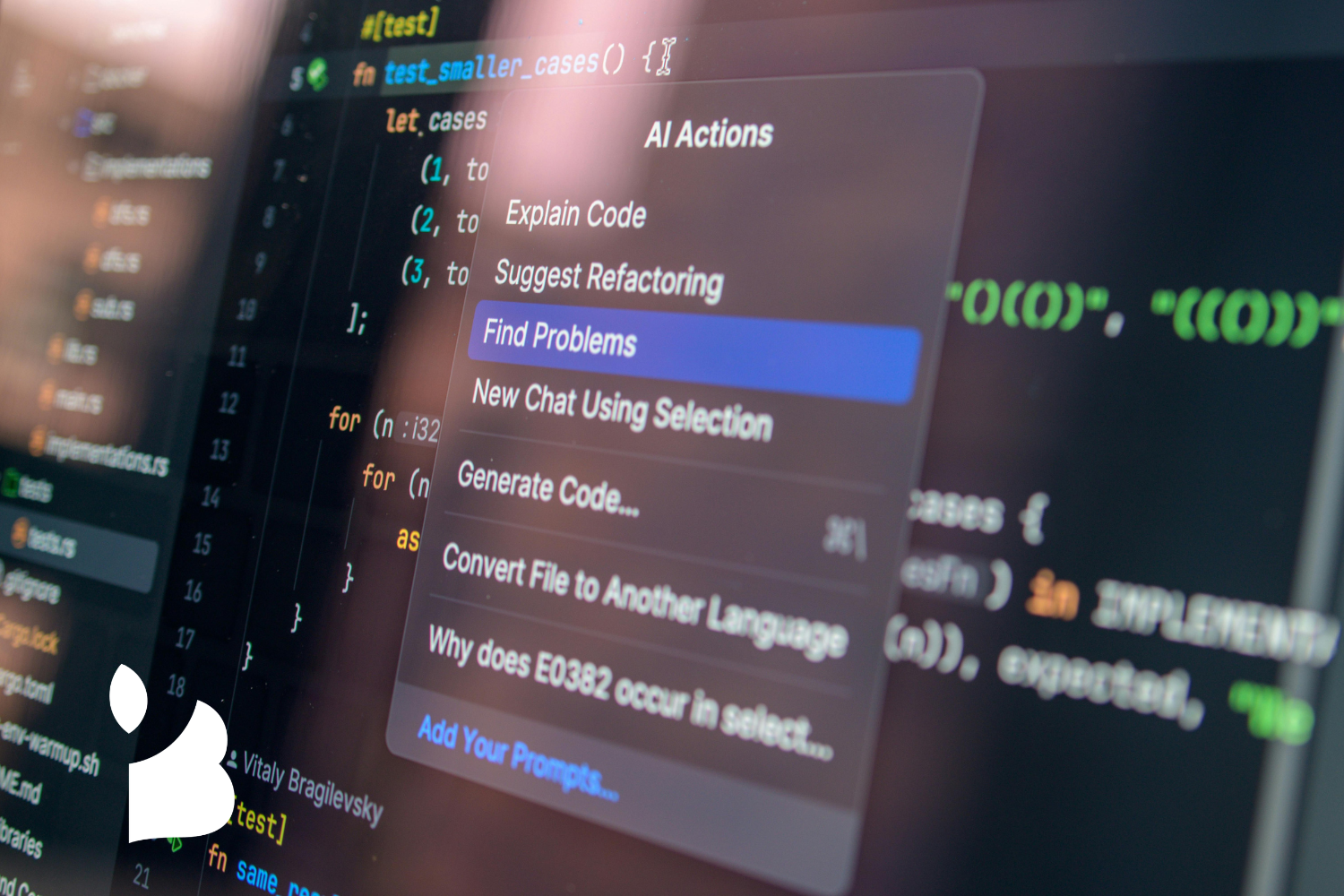
Traditional SEO tracking answers a simple question: where does my page rank for a given keyword?
AI citation tracking answers a genuinely different one: when and why does an AI system choose to reference my content while generating an answer, and does that reference actually send anyone back to my site? Those two questions used to have roughly the same answer. Increasingly, they don't.
Citation and visibility aren't quite the same thing
Worth separating these terms properly before going further, since they get used interchangeably and shouldn't be. Visibility is the broader category, any mention of your brand inside an AI-generated response, with or without a link back to your site.
Citation is the narrower, more valuable subset, specifically when your content is referenced as a linked source. A ChatGPT response can name your brand several times and never send a single visitor your way, that's visibility without citation, and it's worth tracking both separately rather than collapsing them into one number.
Why this is genuinely harder to track than a keyword ranking
AI systems don't respond to a single fixed query the way a search engine does.
They use a process called query fan-out, running multiple related sub-queries around a topic, then synthesising the results into one comprehensive answer. That means publishers are effectively competing for influence across an entire cluster of related questions, not a slot for one specific search term, and nobody outside the AI platform can see the exact prompt a user typed.
Tracking has to work backward from aggregated topics and themes instead.
Different tracking tools also genuinely disagree with each other.
Some retrieve AI-generated responses through official APIs, others through scraping, some use synthetic data, others raw prompt logs, and the same query run through different tools can return meaningfully different results. There isn't yet a single, agreed-upon source of truth like Google Search Console mostly functions as for traditional rankings.
The technical problem Google won't solve for you
Google gives no direct way to isolate AI Overview clicks from ordinary organic search.
Any click originating from an AI Overview shows up in analytics as plain google / organic, or sometimes with no referrer at all, indistinguishable from a standard search click without extra work.
A genuine, if technical, workaround exists.
Google sometimes appends a #:~:text= fragment to AI Overview click-throughs, which scrolls the visitor to the exact passage it cited. GA4 can't natively read this fragment since it's client-side, so isolating this traffic requires custom JavaScript in Google Tag Manager to detect and extract it, then pass it to GA4 as a custom event parameter. It's real, workable, and almost nobody has actually set it up.
A citation isn't the same thing as a backlink either
Worth being precise about this distinction too, since the two get conflated. A backlink is a hyperlink from another site that passes SEO authority and potentially referral traffic through a link profile built up over time.
An AI citation is a live reference generated in response to a specific prompt that may or may not include a clickable link and carries no persistent "authority" in the traditional sense; it's earned fresh with every relevant query rather than accumulated once and kept.
A strong backlink profile doesn't automatically translate into citation wins, and a page can earn frequent citations without ever showing up in a traditional backlink report at all.
You don't need enterprise tooling to start
Dedicated AI visibility platforms exist and genuinely help at scale, but you can build a basic version of citation tracking without one.
A simple approach, sometimes called "vibe-coded" tracking, involves feeding a defined list of target queries into an AI platform's API on a schedule, logging whether your domain appears in the response and where it appears, then reviewing the results in a spreadsheet.
It's limited: you have to supply the keywords yourself rather than discovering new opportunities, and it won't capture sentiment or provide full cross-platform comparison. Though it's a genuinely useful starting point for a business not ready to commit to a full monitoring platform, and it beats not tracking anything at all.
What the numbers actually show
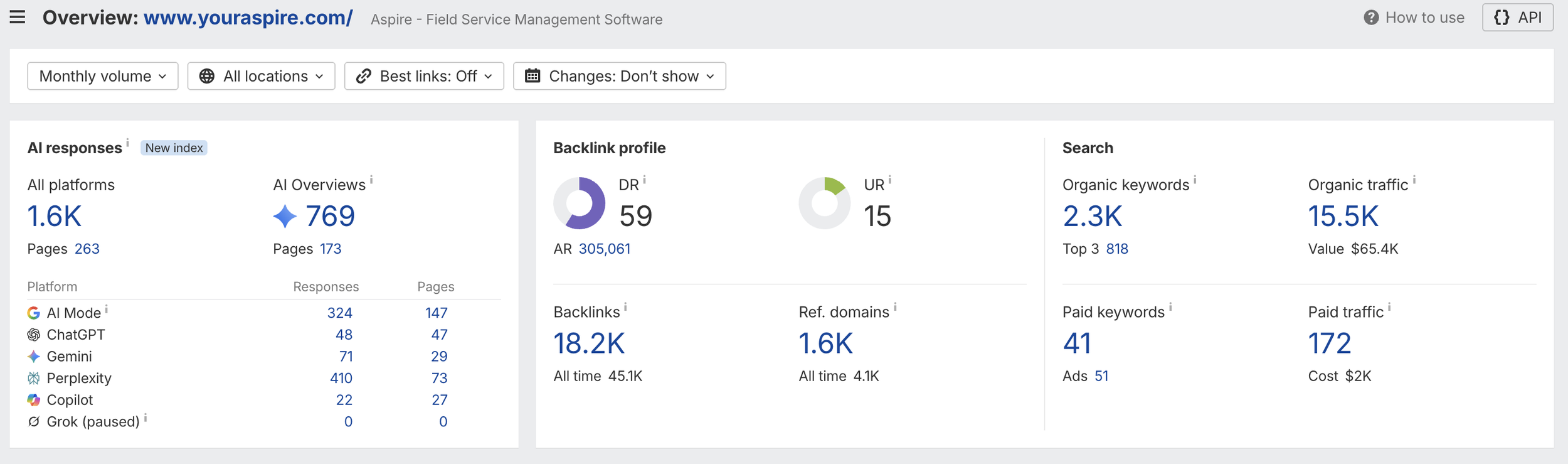
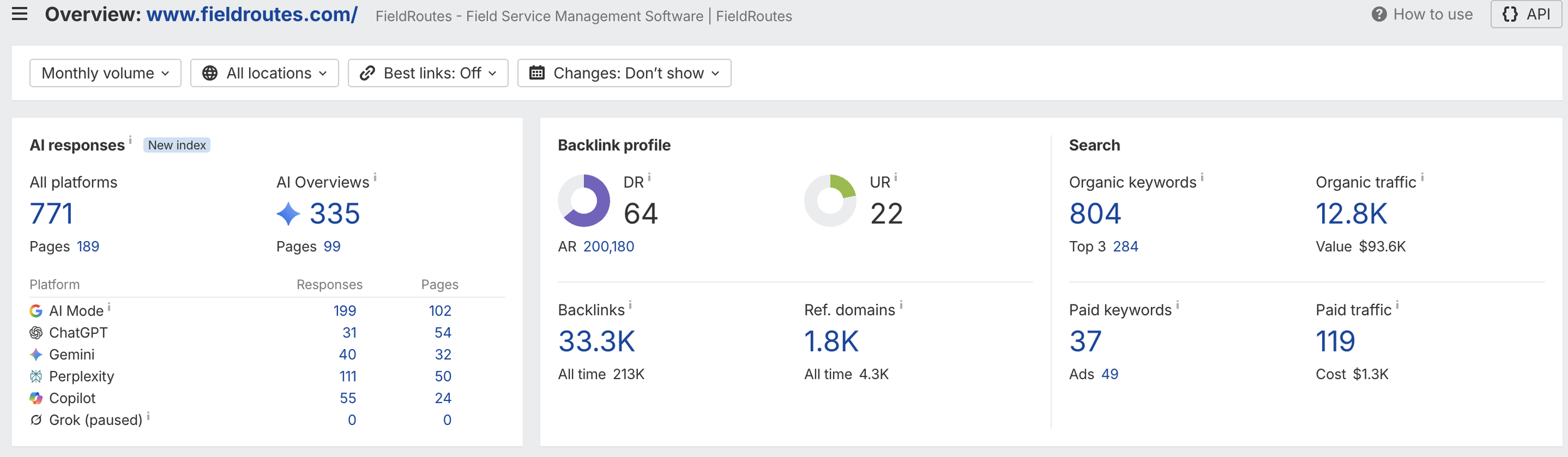
A few figures are worth knowing before deciding how seriously to take this (from two of our US-based SaaS clients).
| Site | AI Overview Citations | Total AI Platform Citations | Pages Cited | Domain Rating |
|---|---|---|---|---|
| Aspire | 769 | 1,600 | 173 | 59 |
| FieldRoutes | 335 | 771 | 99 | 64 |
That 34.5% figure comes from a large-scale study comparing 150,000 keywords that triggered an AI Overview against 150,000 similar informational keywords that didn't, measuring click-through rate before and after a major US rollout.
The great decoupling
There's a specific pattern worth watching in Search Console data: rankings and impressions stay flat or even rise, while click-through rate quietly falls.
This has been called the great decoupling: visibility hasn't actually been lost; the clicks have simply been absorbed by an answer that now sits directly on the results page instead of on your site.
Misreading this as a ranking or content-quality problem leads you to fix pages that were never broken in the first place.
Not every query deserves the same response
Once you can see this pattern, the strategic question changes.
Some queries are worth continuing to defend even as CTR declines; a comparison-style search like "email marketing tools comparison" still tends to drive real engaged traffic, since serious buyers want more depth than an AI summary provides before making a decision. Other queries, a simple "what is email marketing," are probably not worth further optimisation once an AI Overview can fulfil that intent completely inside the results page itself.
Distinguishing between the two saves real effort that would otherwise go into defending traffic that was never coming back.
Why this matters beyond just traffic
Three genuine reasons citation tracking is worth the effort, beyond the direct clicks it might recover.
It's currently the only path to referral traffic from AI platforms at all; no citation means no click, full stop.
It signals topical authority; consistent citation across a subject area builds a case for genuine expertise that shows up in brand perception even without a click.
It creates leverage for future monetisation; publishers with strong, demonstrable AI visibility have a real story to tell advertisers and potential platform partners, even while direct referral traffic from these platforms stays comparatively small for now.
What this actually looks like, in real numbers
Theory is one thing, actual data is more convincing. Here's what AI citation tracking shows for two of our field service SaaS clients, FieldRoutes and Aspire, pulled directly from the same kind of tool this article describes.
| Site | AI Overview Citations | Total AI Platform Citations | Pages Cited | Domain Rating |
|---|---|---|---|---|
| Aspire | 769 | 1,600 | 173 | 59 |
| FieldRoutes | 335 | 771 | 99 | 64 |
The platform breakdown is the more interesting part of this data.
Aspire's citations skew heavily toward Perplexity: 410 of its 769 AI Overview citations come from that platform alone, more than half.
FieldRoutes leans more toward Google's AI Mode instead: 199 of its 335. Two sites in the same industry, built by the same team, show genuinely different citation patterns platform by platform, which is precisely why single-platform tracking gives an incomplete picture, and why the multi-platform view matters more than any one number in isolation.
What this means practically
Citation tracking isn't a replacement for traditional rank tracking; it's a genuinely separate layer that needs its own attention.
That means auditing which of your existing pages are already being cited, identifying where competitors are winning citations you're not, and treating structured, clearly-answerable content, the kind that survives being pulled directly into a synthesised answer, as a distinct content goal from ranking alone.
This is exactly the discipline behind our AI search optimisation work, treating citation and traditional ranking as related but genuinely separate objectives, not the same job done twice.
-
Visibility is any mention of your brand in an AI-generated response, which may or may not include a link. Citation specifically means your content was referenced as a linked source. A brand can have strong visibility with very little actual citation-driven traffic.
-
Not natively. Google doesn't separate AI Overview clicks from standard organic search, they show up as regular google / organic traffic. Isolating this data requires a technical workaround using URL fragment tracking through Google Tag Manager.
-
This is likely the "great decoupling," stable rankings and impressions with falling click-through rate, meaning an AI Overview is answering the query directly in the results page rather than sending the click through to your site. It's a genuine pattern, not a sign your content or SEO has gotten worse.
-
No. Queries where users still want depth after an initial answer, comparisons, evaluations, complex decisions, are worth defending. Simple factual queries fully answerable inside an AI Overview are usually not worth further investment, since the click was never likely to come regardless of ranking.
If you want to understand where you're actually showing up in AI-generated answers, and where you're not, get in touch to speak with David, our SEO and AI strategist.
