
What Estonian defence tech companies get right and wrong about defence communications
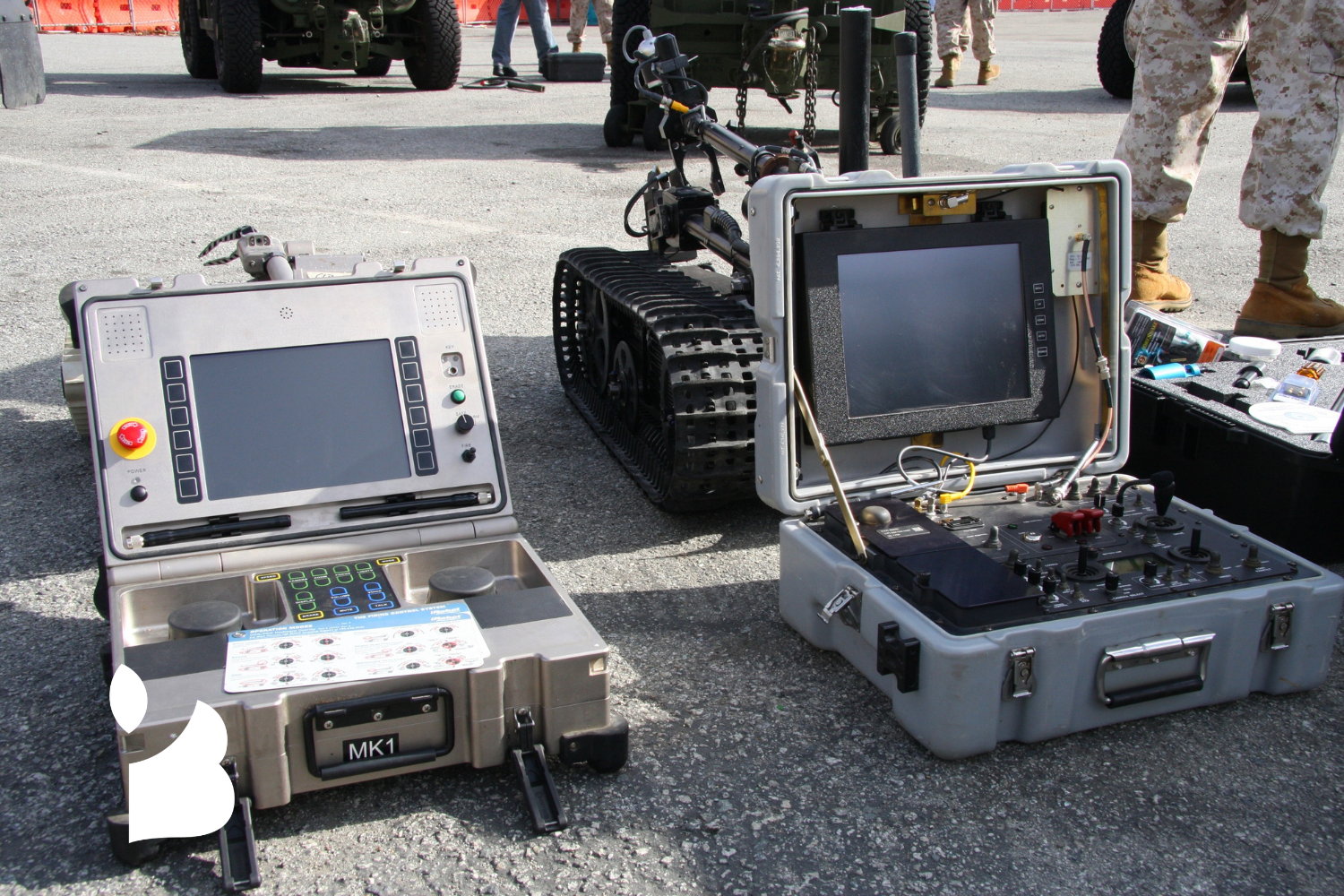
An Estonian robotics company signed a Memorandum of Understanding with a South Korean defence electronics group at a major arms show in Paris this year.
That sentence alone tells you something real about how Estonian defence tech actually gets covered, one company, one international partner, one specific announcement, not a generic capabilities pitch.
The stacked-announcement model already works
Milrem Robotics builds unmanned ground vehicles.
Rather than running one big campaign, the company has spent the past year signing a steady sequence of separate, named international partnerships: Poland, the UK, the Netherlands, and now South Korea's Hanwha Systems. Each one is its own standalone news moment rather than a single launch buried once and forgotten.
That's worth naming as a deliberate model, not luck.
Each announcement is independently citable, independently newsworthy, and compounds credibility over time rather than spending it all at once. A single large launch campaign gets covered once and fades; a sequence of real, separate partnership announcements keeps a company genuinely newsworthy throughout the year, and each new announcement gives search engines, journalists and AI systems alike a fresh, specific reason to reference the company again. It's the clearest live proof this session's earlier argument actually holds: that PR and comms, not classic search-first marketing, is how defence tech communications genuinely works.
Frankenburg Technologies, building missile systems, runs a genuinely complementary, distinct version of the same underlying discipline. Where Milrem's strength is the partnership-announcement cadence, Frankenburg's is owned infrastructure, and it's worth laying the two approaches side by side.
Table 1: Milrem Robotics vs Frankenburg Technologies
| Milrem Robotics | Frankenburg Technologies | |
|---|---|---|
| Core communications strength | Sequential, named international partnership announcements | Owned news and events infrastructure |
| What it demonstrates | Genuine international traction over time | Substantive operational progress, verifiable directly |
| Primary channel | Third-party trade press and partner press releases | Company's own domain, News and Events sections |
| What's still missing | Deeper explanatory content beyond the deal itself | Native-language content matched to real partner markets |
Neither model is wrong; they're genuinely complementary, and the strongest version of Estonian defence tech communications likely combines both: a steady cadence of real, separate announcements, backed by owned infrastructure a journalist or investor can actually dig into directly.
Estonia's real credibility assets, underused
A few things about Estonia itself are worth using directly rather than leaving implicit.
Source: Estonian Business and Innovation Agency, Trade with Estonia
NATO's own Cooperative Cyber Defence Centre of Excellence is headquartered in Tallinn too, a real, physical institutional presence, not just a ranking.
That's real, specific, usable positioning.
Most companies in this space mention ‘based in Estonia’ as a location detail rather than a credibility signal in its own right, and the 100% private-ownership figure specifically is worth leaning on harder than it currently gets used; it's a genuine structural difference from markets built around state-controlled primes, and a real answer to a question serious international buyers actually ask.
The owned news portal as real infrastructure
Frankenburg Technologies, an Estonian missile systems company, shows the other half of this model properly.
Rather than relying purely on third-party press coverage, the company runs a genuine, actively updated news and events section directly on its own site, a Riga missile facility opening, a live interceptor demonstration with Airbus, a funding raise, partnerships with established players, even a government minister's visit, all published as real, substantive updates a journalist or investor can research directly.
That's not a blog for its own sake; it's owned infrastructure.
A company controlling its own record of what's actually happened, rather than depending entirely on how others choose to cover it. It matters for a specific practical reason too: third-party coverage can disappear behind a paywall, get buried in a publication's own archive, or simply never get written in the first place if a story doesn't fit that week's news cycle.
An owned news section never has that problem; it exists for as long as the company's own site does, fully under its own control, and it becomes a genuine, permanent research asset for anyone doing real diligence on the company later.
Hosting events, not just attending them
Frankenburg's site also maintains a dedicated events section, evidence that this already extends beyond press coverage into actually convening people directly.
That's a meaningful shift worth naming on its own, from being present at someone else's trade show to becoming the gathering point yourself.
For a company trying to draw investors and customers rather than just meet them on someone else's agenda, hosting genuinely earns a different kind of attention than attending does: control over the guest list, the agenda, and the narrative, rather than competing for attention on a trade show floor against dozens of other exhibitors doing the same thing.
The real gap underneath the announcements
For all of this real strength, there's a genuine gap sitting underneath the announcement cadence.
What's largely missing is deeper, standalone explanatory content, the piece that answers why a specific capability actually matters strategically, written for a procurement officer or journalist doing real research, not just reacting to the latest press release.
A press release announces that a partnership has been formed.
It rarely explains, in enough depth to actually be useful to someone building a procurement case internally, why unmanned ground vehicles are becoming central to force protection, or why affordable, mass-manufacturable interceptors change the actual economics of air defence.
That gap matters more now than it used to.
AI systems increasingly synthesise answers to exactly these kinds of research questions, and a press release alone, however well distributed, isn't the same kind of citable source as a genuinely structured, well-sourced explainer. This is directly the AEO gap covered in why defence tech marketing is really a PR problem first; the technical work makes an existing communications effort spread further, not a competing discipline.
The multilingual gap specifically
Both companies' real partnerships point toward specific, identifiable markets: South Korea, Poland, the UK, the Netherlands, Germany.
Neither appears to run genuine native-language content matched to those specific relationships.
A company with this many active international partners and no content built for any of those partners' own languages is leaving real reach on the table, particularly given how much of the real decision-making around a defence partnership happens well outside the English-speaking press that tends to cover the initial announcement, inside a partner country's own procurement ministries, industry press and specialist publications.
The same gap is covered in more depth in why nobody in defence tech is ready for AI search or SEO.
Discretion is a documented requirement, not a tone choice
This is the part worth taking most seriously, and it's real, not speculative.
Companies connected to supplying Ukraine's defence effort have faced a documented pattern of intimidation and targeting over the past two years, specifically and heavily traced to Russian state or Russian-linked activity.
Coordinated intimidation has included funeral imagery and mourning symbols placed simultaneously outside defence company offices in more than one European country.
National cybersecurity authorities in at least one NATO country have issued direct warnings to named manufacturers about elevated risks of espionage and sabotage.
Russia's own Ministry of Defence has publicly released the addresses of European drone manufacturers supporting Ukraine, with senior Russian officials separately describing such sites as potential targets.
Alongside this, a documented, Kremlin-linked disinformation network has shifted its targeting toward Ukraine's European backers specifically, using fabricated bylines and AI-generated video to reach very large audiences with false claims.
Worth being precise about sourcing here, this pattern is specifically and heavily documented as Russian in origin. It would be dishonest to claim equivalent documented evidence for other state actors running comparable campaigns against this exact supply chain, so this piece doesn't.
None of this is a reason to go quiet.
Milrem and Frankenburg both communicate actively and effectively, exactly the model this piece has been describing.
It's a reason to build discretion into communications from the start rather than bolt it on after something goes wrong, real care over what leadership and personal information gets published, real verification rigour before any quote or attribution goes out, and genuine awareness that a company's own content can become raw material for exactly this kind of targeting if handled carelessly.
How Blu Mint helps defence communications
A few specific things follow from everything above.
Content and communications support built around real announcements, extending the reach of what a company is already doing well rather than replacing it. Genuine owned-media build, the news and events infrastructure Frankenburg already shows the value of.
AI search optimisation, so a company is the source actually cited when someone researches a capability gap, not just the subject of a press release that gets syndicated once and forgotten.
Multilingual content matched to real partner geography, not generic international copy, the same discipline behind Fortivus's own 24-language build. Furthermore, we build communications with the discretion this sector genuinely requires, not standard PR polish applied without adjustment to a genuinely higher-stakes environment.
-
A few things genuinely stand out, NATO's Cyber Defence Centre of Excellence is headquartered in Tallinn, defence spending sits over 5% of GDP, and 100% of Estonian defence companies are privately owned, a real structural difference from markets built around state-controlled primes.
-
Yes, more so if targeting internationally. Estonia exports two-thirds of its defence sector's output, and the real partnerships driving growth, South Korea, Poland, the UK, the Netherlands among them, are international by nature. Domestic-only visibility misses most of the actual audience.
-
Both, ideally, however hosting is genuinely underused. Attending puts a company inside someone else's agenda. Hosting makes it the convening point, a real, different kind of credibility signal for investors and customers specifically.
-
Yes, directly proportional to how international a company's actual partnerships are. A company with partners across several countries and no content in any of those languages is genuinely underserving the audience its own deal-making has already identified.
If your defence tech company's actual position deserves to spread further than it currently does, get in touch to talk about what that looks like.
-
Because the risk is real and documented, not theoretical. Companies connected to Ukraine's defence supply chain have faced coordinated intimidation, surveillance of leadership, and targeted disinformation, specifically and heavily traced to Russian state-linked activity. Communications built without that awareness genuinely risk becoming raw material for exactly this kind of targeting.
If you're building communications for a defence tech company that need to be both genuinely effective and genuinely careful, get in touch to speak with David.
