
German healthtech marketing; content built for a regulatory landscape that's moving right now
Germany is Europe's largest medical device market and the third-largest globally, worth about$39.2 billion in 2025 and home to over 11,000 medtech companies employing more than 265,000 people.
That scale alone makes it a genuinely competitive market to enter, but the regulatory environment shifts fast enough that content built even a year ago may already cite an outdated version of the landscape.
A market that's already dense, not empty
Around 500,000 different products certified under the EU Medical Device Regulation are already available on the German market, spread across a dense network of both global multinationals and specialised mid-sized manufacturers, the country's well-known Mittelstand, over 11,000 medtech companies in total.
A new entrant isn't introducing a novel category to an empty field; they're competing for attention against an already sophisticated buyer base that's seen dozens of pitches before theirs.
That density is exactly why marketing matters here: regulatory compliance gets a product to market; it doesn't get it noticed once it's there, and content that doesn't demonstrate genuine regulatory and clinical fluency from the first page gets filtered out fast by buyers who've learned to spot a generic pitch immediately.
Every medical device marketed in Germany, including software that qualifies as one, falls under the EU Medical Device Regulation, classified into risk categories from Class I through Class III depending on what the device actually does and how much risk it carries. And German-language labelling is a non-negotiable legal requirement under German law, not a localisation nicety to consider once budget allows.
Why not just a local German medtech agency
Worth answering directly rather than skating past it.
A few things are worth knowing before assuming a Germany-based specialist is automatically the safer choice.
Agencies like MONSOON specialise specifically in MedTech market entry and growth across Germany and the wider EU, and boutique healthcare specialists more broadly typically charge $2,000 to $10,000 monthly, while enterprise-tier agencies like Clarity Quest run project floors starting at $50,000 with hourly rates around $200 to $300. That's a genuinely wide spread, and it means there's no single "going rate" that going local automatically undercuts.
Several agencies listed as healthcare and medtech specialists serving the European market operate with project minimums as low as €1,000, a similar accessible entry point regardless of exactly where the agency itself is based; remote service is already the norm across European healthcare marketing, not the exception.
And AI visibility is already a live differentiator in this exact space too; one competing agency markets itself explicitly around AI visibility and bottom-funnel content built to be cited by LLMs, confirming AEO capability is a genuine, current expectation in healthtech marketing, not a Blu Mint-only claim.
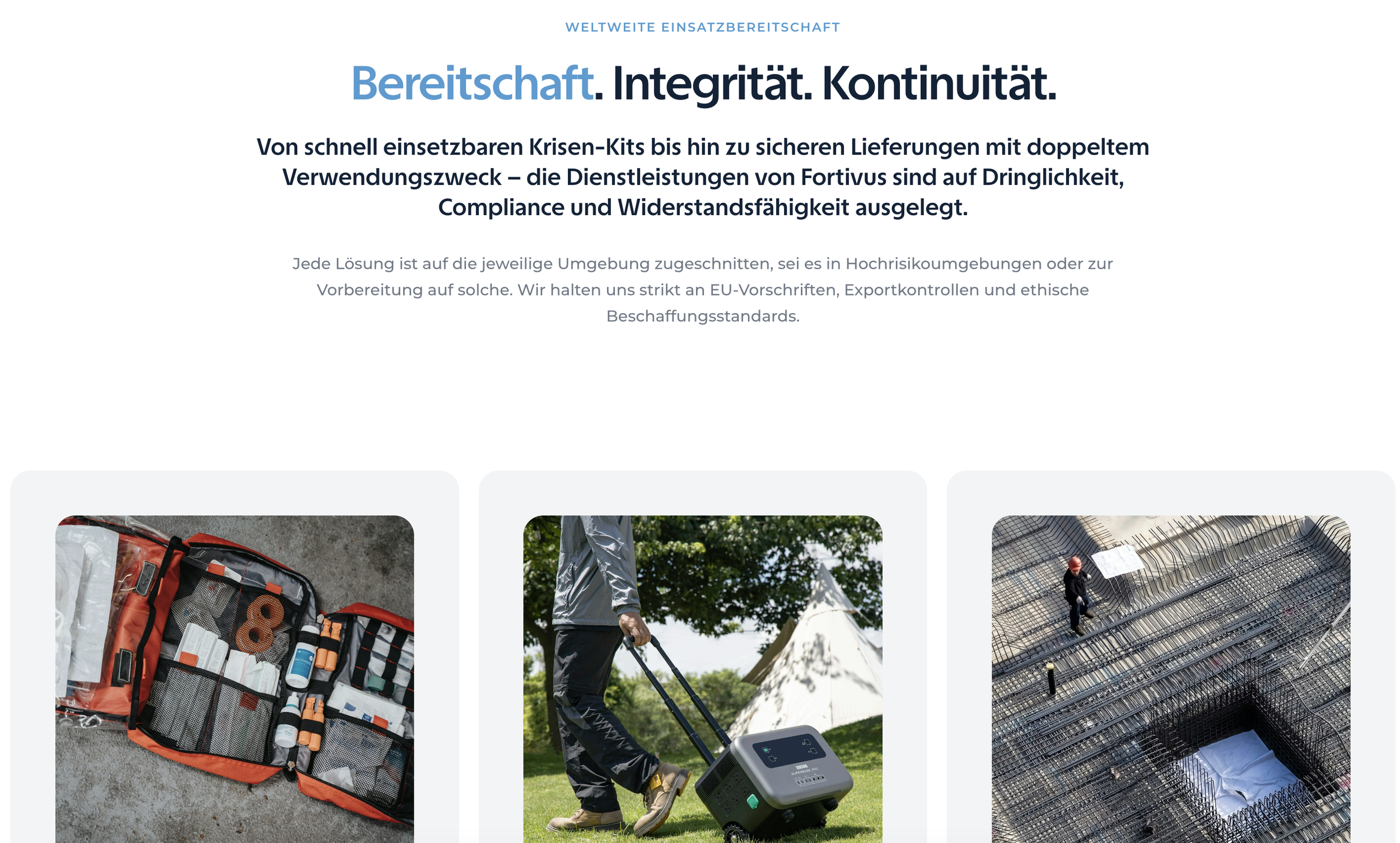
What's harder to find, locally or otherwise, is the combination Blu Mint brings, genuine direct experience writing for a regulated German diagnostics business, described below, alongside real German-language build experience more broadly, David and the team wrote and translated the full German-language site for Fortivus, our sister resilience and defence company, with Kairi leading the design and build, and AEO built into the work from the outset.
What's harder to find, locally or otherwise, is the combination Blu Mint brings: genuine direct experience writing for a regulated German diagnostics business, described below, alongside AEO built into the work from the outset.
The regulation just changed again in January
This isn't settled history; it's actively moving.
DiGA's governing ordinance was amended again in January 2026, adding mandatory outcome reporting that manufacturers now have to measure and document on an ongoing basis, and those reported results directly affect what the app can be priced at, not just whether it stays listed.
That's a meaningful shift for content and positioning specifically.
Previously, a DiGA manufacturer could market a listed product with a reasonable degree of narrative flexibility once it secured initial approval. Under the new rules, marketing claims need to reflect genuine, reportable performance- the same outcome data feeding directly into pricing negotiations with insurers- not aspirational language about potential impact.
A content programme that hasn't been updated since this amendment is making promises the regulatory system itself no longer treats as sufficient on their own.
How the DiGA pathway actually works
Beyond the outcome-reporting shift, it's worth understanding the DiGA process itself, since content pitching this route needs to reflect the real steps rather than a simplified version.
A product first needs CE certification as a medical device, Class I or IIa initially, though the pathway has since expanded to include certain Class IIb products too, alongside a clearly defined medical purpose and compliance with data protection and information security requirements.
From there, a DiGA can be provisionally listed for a trial phase of up to 12 months, extendable by a further 12 months, provided it meets basic safety, functionality and quality requirements and can plausibly demonstrate its potential to improve care.
That provisional period is when a manufacturer actually collects the real-world evidence needed for permanent listing; if sufficient data isn't gathered by the end of the trial period, the listing gets revoked entirely.
This is exactly the nuance a lot of healthtech marketing skips over, treating "DiGA-listed" as a fixed achievement rather than the genuinely conditional status it actually is for most products during that trial window.
One more deadline worth knowing about
Beyond DiGA specifically, EUDAMED registration becomes mandatory from May 2026 for medical device makers; it is the EU's central database for medical devices. There's no automatic transfer of existing data from Germany's national system, DMIDS, into EUDAMED; everything must be re-entered manually, which means any company that hasn't already started this process is working against a firm deadline with real administrative lift behind it.
| Requirement | Deadline or Status | What It Means Practically |
|---|---|---|
| EU MDR compliance | Mandatory since May 2020 | Baseline requirement for any medical device, including qualifying software |
| German-language labelling | Ongoing legal requirement | Non-negotiable under German law, not an optional localisation choice |
| DiGA outcome reporting (AbEM) | In force from February 2026 | Manufacturers must measure and document performance, tied directly to pricing |
| EUDAMED registration | Mandatory from May 2026 | Manual re-entry required, no automatic transfer from Germany's DMIDS system |
What genuine market presence in this sector looks like, honestly
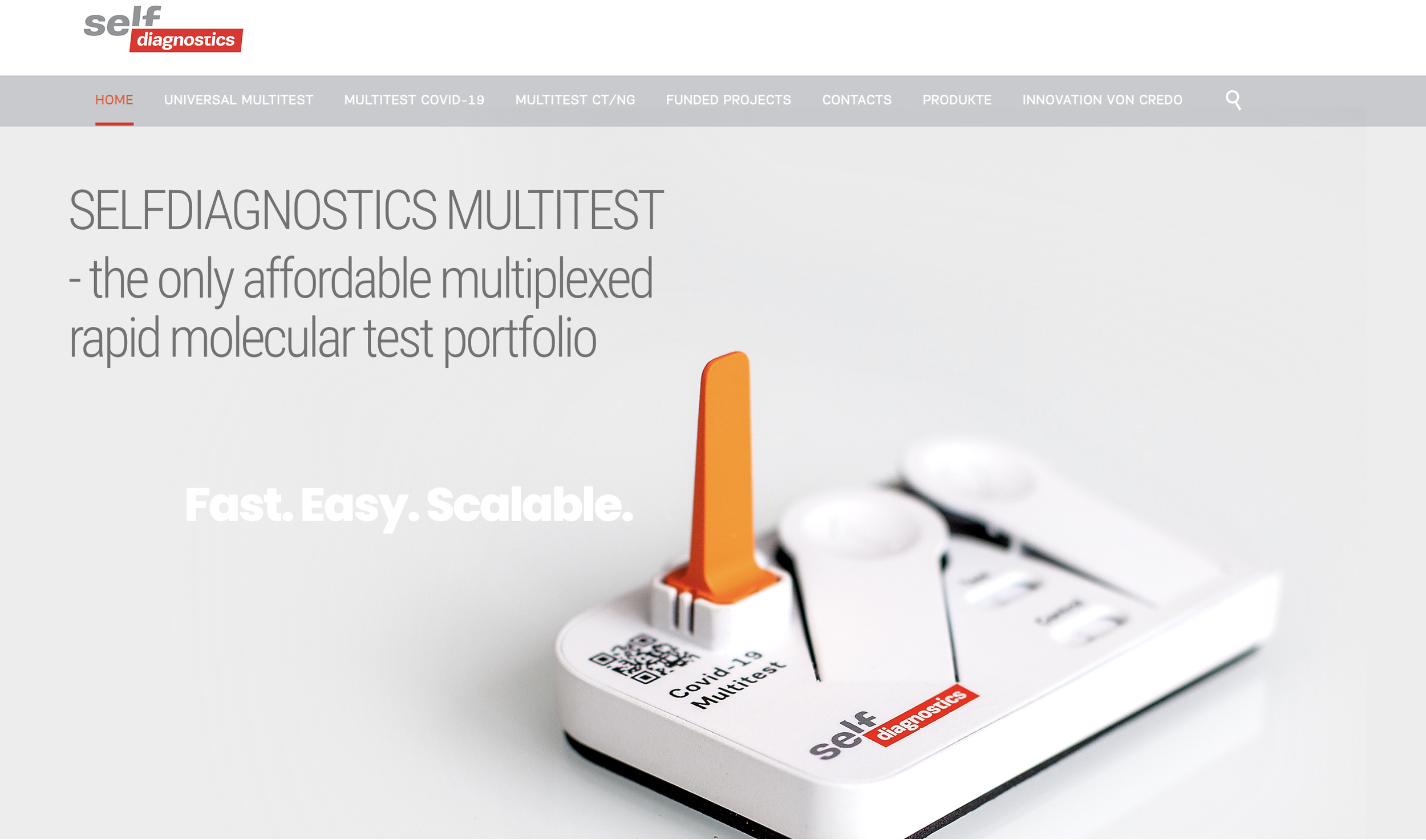
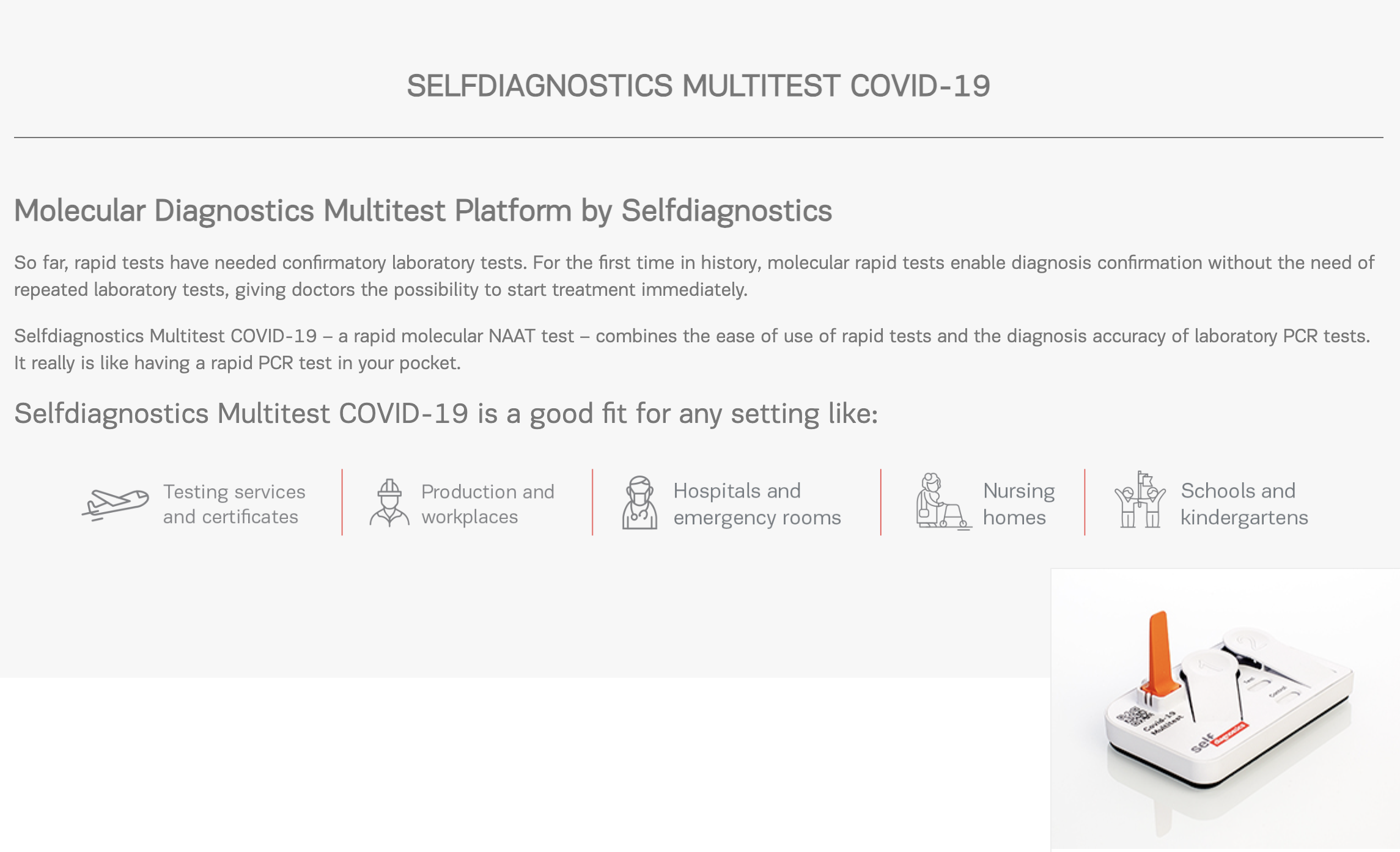
Blu Mint has real, direct experience writing for exactly this kind of regulated business, not just theoretical knowledge of the frameworks. We wrote website and e-shop content for Selfdiagnostics, a molecular diagnostics company manufacturing PCR-grade point-of-care testing devices, with production based in Germany.
Worth being transparent that the client has since removed that content from their live site, we don't know their specific reasons, and it's not our place to speculate on a former client's decisions. What that engagement does confirm is genuine, hands-on experience writing for a regulated diagnostics business operating in the German market, not a hypothetical case study built from a brief we've never actually delivered on.

Where this audience actually spends attention
Healthtech buyers in Germany aren't a single audience either.
Clinicians and prescribers deciding whether to recommend a DiGA product care about clinical evidence and genuine patient outcomes above all else, while procurement teams at hospitals or insurers evaluating a broader medtech purchase weigh compliance posture, integration complexity and total cost of ownership.
Both groups research heavily before ever engaging a sales conversation, increasingly through AI search tools as well as traditional channels, which makes structured, accurate, genuinely sourced content- the kind that holds up to real scrutiny- more valuable than broad awareness advertising in this sector specifically.
What actually needs to happen, practically
A few practical shifts follow directly from all of the above:
Marketing claims traceable to genuine, reportable outcomes, not aspirational potential, especially for anything sitting inside or adjacent to the DiGA pathway, given how directly outcome data now feeds into pricing.
Content audited for regulatory accuracy on a real schedule, not just refreshed for tone, since the DiGA and EUDAMED landscape has already moved twice in ways that could quietly date existing claims.
German-language content built in from the start, not translated as an afterthought, since it's a legal requirement for anything classified as a medical device, not a nice-to-have.
Content built for the specific buyer, not a blended persona. Clinicians care about clinical evidence and patient outcomes. Procurement teams care about compliance posture, integration and total cost of ownership. The same page rarely serves both well.
Honest representation of DiGA's real outcome distribution- permanent listing isn't guaranteed- builds more credibility with a sophisticated buyer than treating listing itself as the achievement. This is the same principle behind our content marketing and SEO work generally, and increasingly AI search visibility too. Content built on real, current, sector-specific understanding earns trust that generic positioning never quite manages, whether that trust comes from a human reader evaluating a vendor or an AI system deciding who to cite.
-
DiGA is Germany's programme for prescribing and reimbursing digital health apps through statutory health insurance, the first system of its kind globally when it launched in 2020, and it now reaches roughly 73 million people.
-
No. Roughly 65% of listed DiGA products have secured permanent reimbursement, but around 20% have lost coverage entirely and 15% remain under temporary review. Listing is a real opportunity, not a guaranteed outcome.
-
Manufacturers now have mandatory, ongoing outcome reporting requirements, and those reported results directly affect pricing, not just whether a product stays listed. It's a shift from marketing potential toward marketing demonstrated, reportable performance.
-
Yes, for anything classified as a medical device. German-language labelling is a non-negotiable requirement under German law, not a nice-to-have localisation choice to consider later.
-
The EU's Consumer Credit Directive II is entering into force through 2025 and 2026, bringing BNPL products under formal disclosure and affordability assessment rules. In Switzerland specifically, FINMA continues to enforce consumer protection and responsible lending directly.
-
A product can be provisionally listed for up to 12 months, extendable by another 12, during which the manufacturer gathers real-world evidence for permanent listing. If sufficient data isn't collected in time, the listing is revoked, which is why "DiGA-listed" alone isn't the same as a guaranteed, permanent market position.
-
Not necessarily. Pricing among healthcare and medtech specialists varies enormously, from $2,000 to $10,000 monthly for boutique agencies up to $50,000+ project floors for enterprise-tier firms, so there's no single local rate to compare against. Remote service is already normal across European healthcare marketing, and AI visibility, increasingly a genuine differentiator in this space, isn't tied to geography at all.
-
Yes, directly. We wrote website and e-shop content for Selfdiagnostics, a molecular diagnostics company manufacturing point-of-care testing devices with German production. That content has since been removed by the client, and we don't speculate on their reasons.
If you're marketing a healthtech business into Germany and want content built on real, current regulatory understanding, get in touch to speak with David, our SEO and AI strategist or Dario, our DACH expert.
