
International SEO for DACH, when Germany, Austria and Switzerland actually need separate treatment
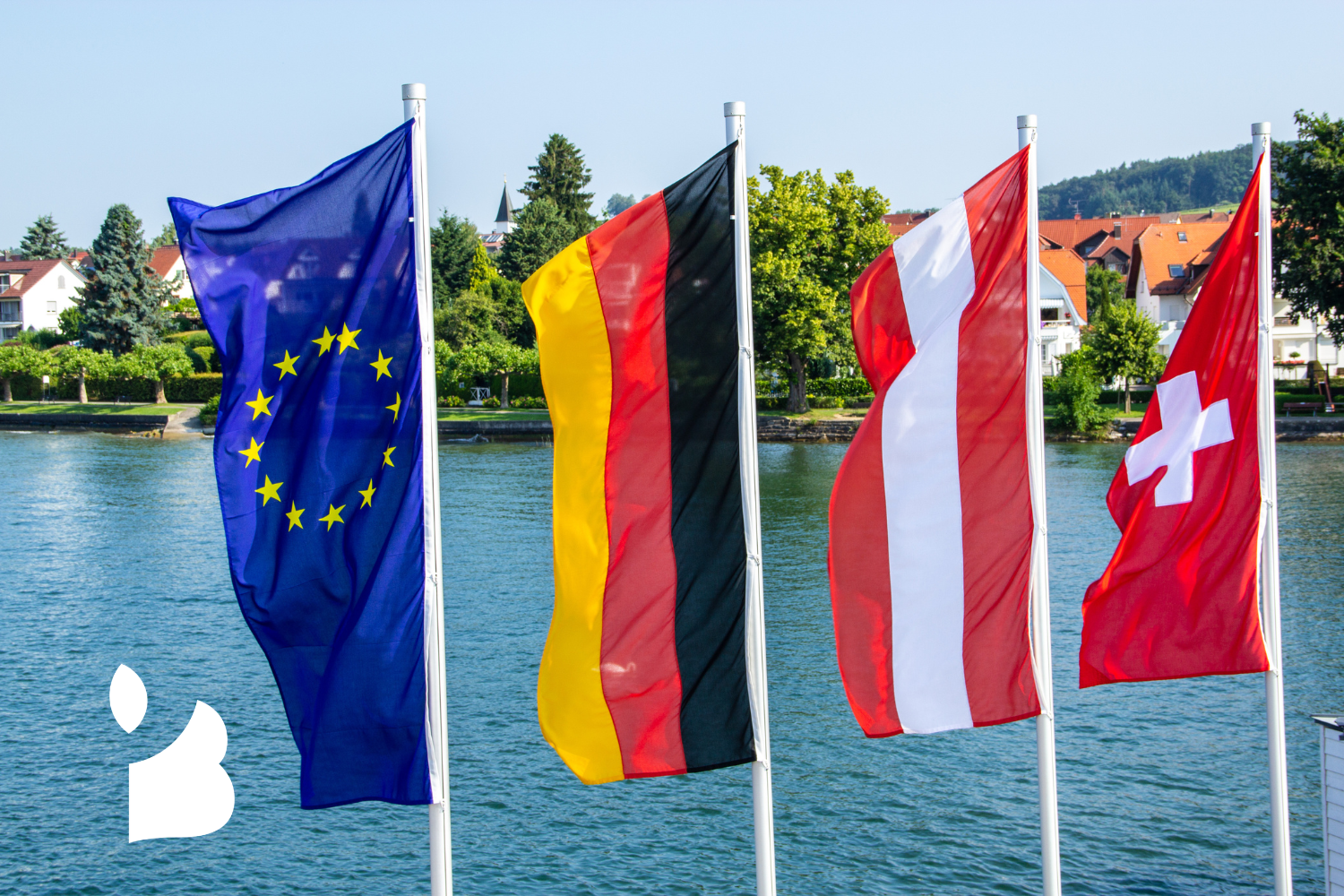
A 2019 Google Search Central thread titled "The Death of DACH Hreflang" is still being referenced by SEOs today.
That's not a sign the problem got solved; it's a sign it's still genuinely tricky: three countries sharing one language, each with real differences a single German-language site can't always paper over.
Language-first versus country-first, and why DACH sits right on the line
Our guide to multilingual SEO draws the core distinction: language-first serves one version per language regardless of country; country-first builds separate versions per country even when the language is identical.
When we built Fortivus across 24 languages, we deliberately used language-only hreflang, one German version, not de-DE, de-AT and de-CH separately, because their B2B and B2G offering genuinely doesn't vary by country.
That was the right call for them. It isn't the right call for everyone.
A few genuine, structural differences make DACH the region where country-first is worth taking seriously.
Where Germany, Austria and Switzerland actually diverge
Vocabulary itself differs. Austrians search "Jänner,"; Germans search "Januar," for the same month- a small example of a broader pattern across everyday vocabulary, food terms, official language and everyday phrasing that vary enough to affect which keywords actually get typed
Consent law isn't uniform. Consent practice looks uniform on the surface but isn't strictly mandated the same way everywhere. Double opt-in isn't a strict statutory requirement in Germany or Austria; it's become the de facto standard in both, since German case law established that single opt-in alone doesn't adequately prove consent, and the same practical logic holds in Austria too. Switzerland's UWG law requires opt-in consent for marketing specifically, a separate, stricter standard from the country's general data protection law
Switzerland sits outside GDPR entirely for general data protection; its FADP doesn't require an upfront legal basis the way GDPR's Article 6 does. Marketing emails specifically are governed by a separate law though, the UWG, which does require opt-in consent, a genuinely different regime from the FADP's more permissive general stance
Currency and pricing differ structurally. Switzerland prices in francs, not euros, and Swiss consumers expect that natively, not as a converted afterthought bolted onto a euro-priced page
Cold outreach rules diverge sharply. Germany and Switzerland tolerate presumed-consent cold calling in practice despite formal restrictions; Austria has no such allowance at all, making cold outreach considerably riskier there specifically
Combining search volume across all three into one blended DACH number, a mistake worth naming directly since it's common, produces a misleadingly large figure nobody actually searches.
A keyword showing strong "DACH volume" might be almost entirely German, with negligible Austrian or Swiss search behind it, and a strategy built on that combined number ends up over-investing in markets that were never really there.
Building a site that actually reflects this
Getting the technical structure right matters as much as recognising that differences exist.
A genuine country-first DACH build typically needs country-region hreflang pairs, de-DE, de-AT and de-CH, rather than a single blended de tag, each pointing to a version with its own currency display, its own consent flow matching local opt-in law, and ideally its own keyword-mapped content rather than one German page duplicated three times with a find-and-replace on currency symbols.
Getting this wrong in either direction carries real cost: over-splitting a business that never needed it multiplies maintenance overhead for no ranking benefit; under-splitting a business that genuinely needed separation leaves real revenue and compliance exposure on the table.
The market size behind the decision
Population and spending power differ enormously across the three, worth knowing before deciding how much separate investment each deserves.
| Country | Population | E-commerce Market Size (2026) | Cross-Border Spend Share |
|---|---|---|---|
| Germany | 84.6 million | $113.95 billion | 18% |
| Austria | 9.1 million | $14.27 billion | 44% |
| Switzerland | 8.9 million | Smaller, high per-capita spend | 23% |
Austria's 44% cross-border figure is worth sitting with; nearly half of Austrian online spending already leaves the country, largely to German retailers.
That cuts both ways: a German-focused site may already be reaching Austrian buyers by default, but a business wanting to win Austrian customers specifically, not just catch spillover, needs content and positioning built for Austria on its own terms.
Real, current demand for exactly this problem
This isn't a hypothetical content gap.
An independent SEO consultant markets herself specifically around auditing and fixing DACH store setups, hreflang and keyword differentiation included, as a standalone paid service.
A dedicated keyword research tool sells DACH-specific volume separation as a core feature, explicitly warning against combining DE, AT and CH search data into one number. A specialised German SEO agency has built its entire positioning around keyword research methodology tuned specifically to German-language markets.
That's three separate, independently operating businesses monetising this exact problem- genuine commercial validation that the confusion is real and people are actively paying to have it solved properly, not a technical curiosity nobody outside an SEO forum actually cares about.
What this looks like across real client work
Fortivus is the clearest contrast case. Twenty-four native-language sites, German included, built language-first because the offer is genuinely identical across DE, AT and CH. No pricing difference, no product variation, no reason to fragment domain authority three ways. This is honestly the more common right answer; most businesses don't need the split, and knowing that saves real budget you can spend elsewhere.
Selfdiagnostics, a German molecular diagnostics company manufacturing PCR-grade point-of-care testing devices, needed something closer to country-specific treatment given medical device regulation is enforced nationally and German-language labelling is a legal requirement, not a preference. We wrote their website and e-shop content with that specificity in mind, content built to survive scrutiny from a regulated market rather than a generic translated brochure.
Aspire and FieldRoutes, part of the ServiceTitan portfolio, show what genuine content scale looks like when built for AI citation as well as traditional ranking. Real, verifiable AI Overview citations across Google, ChatGPT, Perplexity and more- not just traffic numbers- Aspire alone shows 769 AI Overview citations across 173 pages. That same AEO discipline applies directly to DACH content: structured, specific, genuinely localised pages earn AI citations the same way they earn rankings, and a blended, generic DACH page is exactly the kind of content that struggles to get cited cleanly in any single market's AI search results.
Autobahn is a genuine country-first precedent, just outside DACH itself. The business runs real offices and operations in both Estonia and Germany, not a single company selling into two markets from one location, which is exactly the kind of genuine multi-country presence that justifies separate treatment rather than one blended site. Kairi designed and built their site on Squarespace, with translation and polish extending into Polish, Czech and other Central European languages too- real proof that the same disciplined, native-language approach applies wherever a business actually operates, not just within Germany, Austria and Switzerland specifically.
| Signal | Points Toward |
|---|---|
| Identical offer across all three countries | Language-first (one German version) |
| Pricing, currency or product differs by country | Country-first (separate DE/AT/CH versions) |
| E-commerce with VAT or consumer law exposure | Country-first |
| B2B/B2G with consistent terms everywhere | Language-first |
| Regulated industry (finance, health, legal) | Country-first, given enforcement is national |
The cost that outlasts the initial build
A country-first split isn't a one-time decision; it's an ongoing maintenance commitment you need to weigh honestly before committing.
Three separate content calendars, three sets of pricing pages to keep synchronised when a product changes, three consent flows to keep compliant as Austrian, German and Swiss regulation each shift independently over time.
A business that splits DE, AT and CH without the resourcing to actually maintain three versions properly often ends up worse off than if it had stayed language-first; one Austrian page that quietly goes stale while the German version gets all the attention does more damage to Austrian trust than never having built a separate version at all.
The decision isn't just "does this business need separation," it's "does this business have the ongoing capacity to maintain separation properly," and being honest about that second question upfront avoids a genuinely common, expensive mistake.
Where this touches the rest of your build, not just content
Country-first decisions aren't purely a content question; they're a technical build decision too.
On Shopify, separate DE/AT/CH storefronts affect currency display, tax calculation and checkout flow directly, not just which blog posts get published where. On Squarespace, hreflang for country-region pairs (de-DE, de-AT, de-CH) has to be hand-built through code injection, since the platform doesn't support it natively, exactly the kind of implementation detail that gets skipped when a business treats this as a content-only decision.
Once a site's structure is settled, everything downstream needs to match it.
Enterprise SEO work at scale needs the redirect and hreflang logic to be consistent across potentially thousands of URLs, and content marketing built for the wrong model- generic German content assuming one audience- wastes real budget on a market that actually needed three distinct approaches.
Increasingly, AI search visibility depends on this too; structured, country-specific content is easier for an AI system to parse and cite accurately than a single blended page trying to serve three audiences at once.
Why Blu Mint for DACH clients specifically
Getting the country-first versus language-first decision right takes more than a technical checklist; it takes someone who actually understands both the SEO mechanics and the market itself.
David leads AI search and SEO strategy across every engagement, the same discipline behind the Fortivus, Selfdiagnostics and Autobahn work described above, applied to your specific decision rather than a generic template.
Dario, our senior consultant for DACH specifically, brings the native German-language fluency and regional market understanding that separates genuinely localised content from a well-intentioned translation- the difference between knowing that Austrians search "Jänner" and actually writing content that sounds like it was built for an Austrian audience from the start.
That combination, technical SEO judgement plus genuine DACH-market fluency, is exactly what this decision needs. Getting it wrong in either direction is expensive, guessing at a check next to guessing at a page won't fix.
-
No, and Fortivus is a real example of when it doesn't. If your offer, pricing and terms are genuinely identical across Germany, Austria and Switzerland, one language-first German version is usually the right, simpler answer.
-
Pricing or currency differences are the clearest signal. Switzerland's franc pricing alone often justifies separate treatment, alongside genuine regulatory exposure in finance, health or e-commerce specifically.
-
Similar in practice, but legally separate. Switzerland sits outside GDPR entirely for general data protection; its FADP doesn't require an upfront legal basis the way GDPR's Article 6 does. Marketing emails specifically are governed by a separate law though: the UWG, which does require opt-in consent, a genuinely different regime from the FADP's more permissive general stance
-
Yes, but not natively. Shopify handles multi-currency and localised checkout more natively, while Squarespace requires hand-built code injection for country-region hreflang pairs, since neither platform supports this out of the box at the level a genuine DE/AT/CH split requires.
If you're deciding whether Germany, Austria and Switzerland need separate treatment for your business specifically, get in touch to speak with David, our SEO and AI strategist.
